

1. Core Planning Elements for Laboratory Construction
Before starting construction, clear thematic positioning and overall planning are crucial. Laboratory types vary, including chemical labs, biological research institutes, and high-tech experiment centers, each corresponding to different architectural styles and functional requirements.
Site Selection and Environmental Adaptation: Prioritize flat, open areas for planning large facilities. Mountain interiors can serve as ideal locations for hidden laboratories, using natural terrain for natural camouflage. Considering the spatial needs of experimental equipment and future scalability, it is recommended to reserve a basic area of at least 30×30 blocks.
Determining Thematic Style: Modern sci‑fi laboratories should extensively use materials such as quartz blocks, glass, and iron blocks. Magical laboratories can combine nether bricks and purpur blocks to create a mysterious atmosphere. Once the style is defined, maintain consistency in both interior and exterior elements to avoid visual clutter caused by material mixing.
2. Functional Zoning Design for Laboratory Interior Spaces
A well‑equipped laboratory should be divided into multiple functional zones, organically connected by corridors or portals.
Core Experiment Area: Equip with experiment tables (simulated using pressure plates and hoppers), reagent shelves (item frames combined with various potions), and reaction devices (brewing stands with redstone circuits). Walls can use blackboards (dark wool combined with item frames) to record experimental data, and floors can be paved with white concrete or quartz blocks to enhance a clean feel.
Equipment Storage Area: Store materials according to their nature. The chemical area should have explosion‑proof cabinets (stained terracotta), while biological samples require low‑temperature storage (blue ice blocks with fog effects). A centralized storage system is recommended, combined with hopper minecarts for automatic material distribution.
Observation and Control Center: Equip with large display screens (black concrete combined with light‑emitting blocks), data terminals (lecterns with books and quills), and a monitoring system (map art). Upper levels can be designed as astronomical observatories, decorated with end rods and telescopes (shulker boxes).
3. Advanced Building Techniques and Automation System Integration
Redstone Automation Systems: Experiment tables can detect potion states using comparators, combined with note blocks to signal experiment completion. Automatic access systems (iron doors with pressure plates) ensure area security, and item sorting devices (hoppers with droppers) enable precise reagent delivery.
Energy Supply Solutions: The laboratory’s energy core can adopt a simulated reactor design (beacon combined with glass pillars), paired with “power transmission lines” (redstone lamps and glowstone) to form a complete energy network. Renewable energy zones can include wind turbines (white wool with fences) and solar panels (black glass panes).
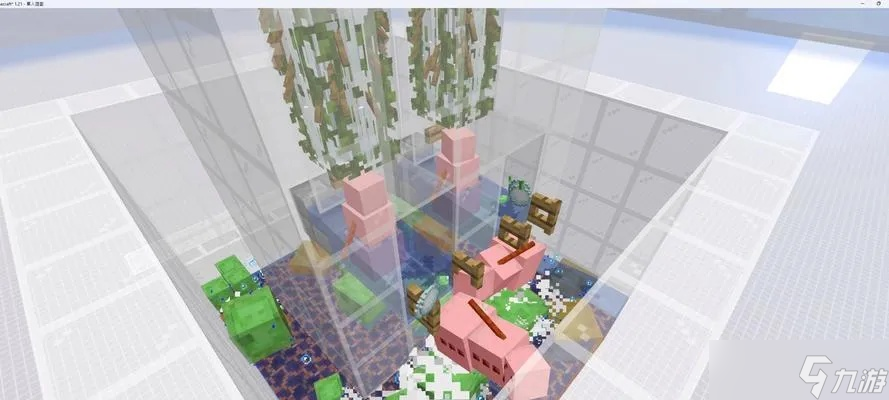
Environmental Detail Enhancement: Use vines and lily pads to create biochemical contamination zone effects. End portal frames can serve as bases for high‑energy experimental devices. Lecterns with books and quills form experimental log recording points. Liquid experimental materials can be represented using dyed water bottles and brewing stands.
4. Detailed Examples of Unique Laboratory Constructions
High‑Tech Energy Laboratory: Based on an energy storage exhibition hall, the main structure uses white concrete and glass curtain walls. Inside, set up an energy core (beacon beam), control terminals (lectern combinations), and transmission arrays (end rod matrices). Energy conduits use blue stained glass wrapped around redstone circuits to visually display energy flow.
Ecological Research Laboratory: Includes climate simulation zones (transplanted from different biomes), species cultivation gardens (various plants with bone meal mechanisms), and a gene sequencing center (dyed bottles combined with beacons). Adopt a dome greenhouse structure (glass with iron bar domes) and install an automatic irrigation system (dispensers with water buckets).
Magic Experiment Tower: Combines traditional wizard tower elements with modern laboratories. Spiral staircases connect various functional floors, with an astronomical observatory at the top and a spell testing chamber in the basement. Use bookshelves, enchanting tables, and End‑related elements to reinforce the magical theme.
5. Common Construction Issues and Solutions
Unbalanced Space Planning: Adopt modular design, reserving 20% expansion space for each functional zone. Use sliding doors (piston devices) or rotating walls (sticky pistons) to enable spatial reconfiguration.
Redstone System Interference: Key circuits should use insulation design (isolated with different colored wool). Set up signal relay stations (redstone repeater groups) to ensure stable long‑distance transmission.
Difficulty in Style Consistency: Establish material usage guidelines, limiting the main structure to 3–4 core block types. Achieve visual richness through texture combinations rather than material accumulation.
6. Creative Extensions and Personalization Suggestions
Laboratory construction is not only about functional implementation but also an expression of the creator’s scientific vision. Incorporate personal research directions, such as adding aquariums and observation stations for oceanographer labs, or building core sample libraries for geologist labs. Integrate new blocks and mechanisms from game updates to continuously optimize laboratory functionality, such as crystal geology labs in version 1.17 or deep dark ecosystem research stations in version 1.19.


